 Chain Alpha Trends
 Solv Protocol Explained: Stunning Guide to the Best SOLV
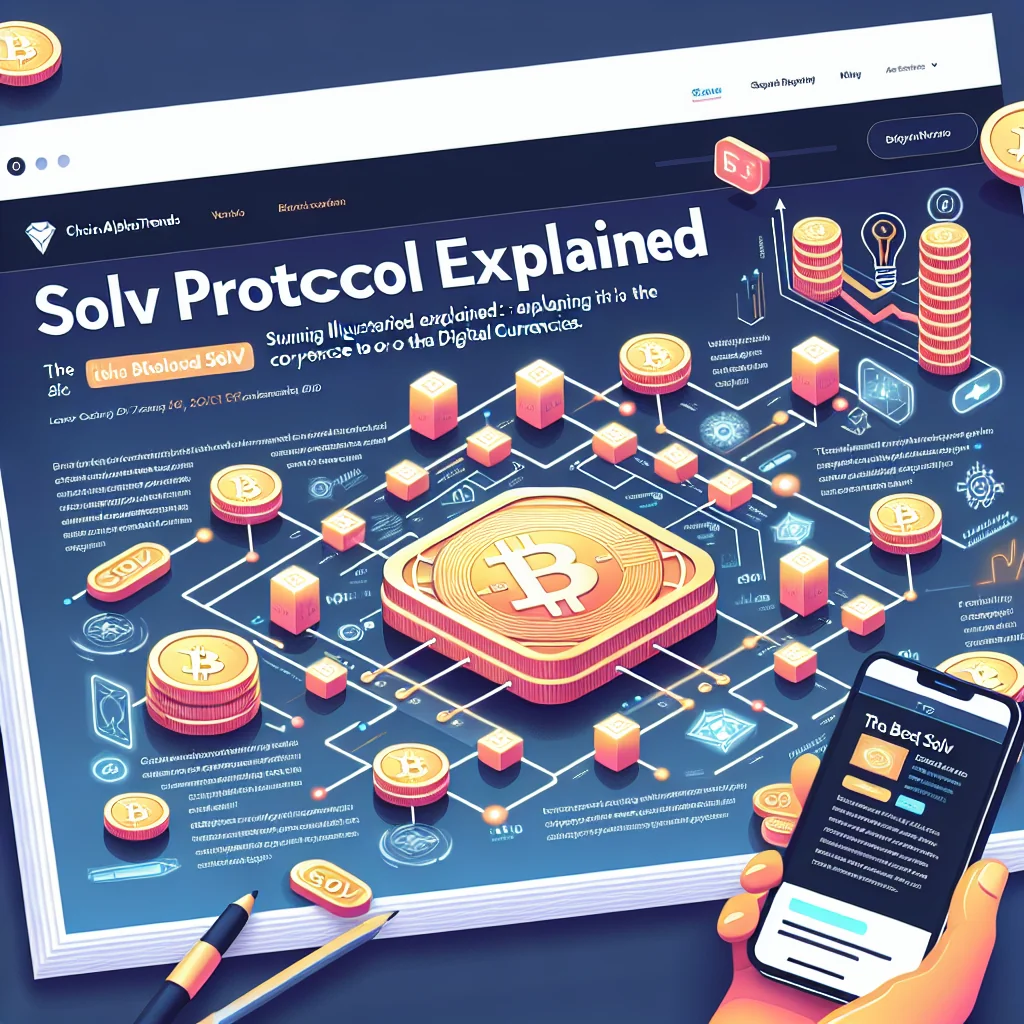

Solv Protocol sits at an interesting crossroads in DeFi. It mixes tokens with NFTs and turns them into flexible financial tools. For anyone curious about yield strategies, vesting, or structured products, SOLV deserves a closer look.
This guide breaks down Solv Protocol in clear steps: what it does, how its vouchers work, what SOLV is used for, and the main risks to watch. By the end, you will have a solid mental model of how Solv fits into the broader DeFi stack.
What Is Solv Protocol?
Solv Protocol is a DeFi infrastructure project focused on “financial NFTs.” In short, it turns on-chain financial rights, such as locked tokens or future yield, into NFTs that can be issued, traded, or redeemed under clear rules.
Instead of a simple ERC‑20 token, Solv uses NFTs that carry extra data. This data can define vesting schedules, interest rates, claim periods, or ownership rules. Think of them as smart envelopes that hold assets and conditions in the same package.
Core Idea: Financial NFTs and Vouchers
The basic building block in Solv is the voucher. A voucher is a type of NFT that represents a specific financial contract. Each voucher can hold tokens plus rules that manage how those tokens can move or be claimed.
For example, a project team can issue vesting vouchers to investors. Each voucher holds tokens with release dates. Investors can sell the voucher on secondary markets without breaking the vesting logic built into it.
How Vouchers Work on Solv Protocol
Vouchers aim to make financial agreements programmable and tradable. They wrap conditions around assets in a transparent and verifiable way so that both issuers and buyers know exactly what they are dealing with.
- Creation: An issuer defines the asset, rules, and timeline for the voucher.
- Minting: The voucher NFT is minted to represent this contract on-chain.
- Distribution: The issuer sends vouchers to investors, users, or partners.
- Trading: Vouchers can trade on marketplaces that support them.
- Redemption: When terms are met, the holder redeems some or all of the assets.
This structure gives more control than a standard token lockup. Conditions are clear from the start, visible in the contract, and enforceable by code, which reduces room for surprise changes or hidden side deals.
Types of Products Built on Solv
Solv’s voucher logic allows a range of structured products that track different needs. These products focus on yield management, token distribution, and liquidity strategies.
- Vesting vouchers: Tokens released over time for investors, teams, or advisors.
- Yield vouchers: Claims on future yield from DeFi strategies or staking.
- Liquidity vouchers: Positions in liquidity pools with defined rules.
- Bond-like vouchers: Fixed-income style products with clear maturity and payout.
A simple case: a DeFi protocol wants to reward early users with vested governance tokens. Instead of raw tokens with a manual lock, it issues vesting vouchers. Users hold or trade these vouchers, and the underlying token releases slowly, following the contract schedule.
The SOLV Token Explained
SOLV is the native token of Solv Protocol. It binds the ecosystem together, supports governance, and can connect to fee models or incentive programs, depending on protocol upgrades and community decisions.
While exact tokenomics can change through governance, SOLV usually has three key roles: governance voting, utility within the protocol, and incentive alignment for long-term users and partners.
Key Roles of the SOLV Token
SOLV thrives when the protocol sees active use. Its main value lies in how it interacts with vouchers, liquidity, and governance.
| Role | Description | Example Use |
|---|---|---|
| Governance | Holders vote on protocol upgrades, fees, and incentives. | Voting on new voucher types or supported chains. |
| Utility | Used within Solv dApps, such as staking or ve-style locking. | Locking SOLV for boosted rewards on vouchers. |
| Incentives | Rewards for early users, liquidity providers, partners. | Campaigns that pay in SOLV for using specific products. |
In practice, SOLV behaves like a mix of governance asset and functional token. Active users who stake, vote, or hold structured products can shape how SOLV’s utility evolves over time.
Why Solv Protocol Matters in DeFi
Many DeFi systems still struggle to manage vesting, structured yield, or complex lockups in a flexible way. They rely on simple token locks that are hard to trade or reuse. Solv fills that gap with a common standard for financial NFTs.
This reduces friction for both protocols and investors. Protocols can build advanced products on top of Solv’s infrastructure, while investors can treat vouchers like liquid positions instead of being stuck with non-transferable locks.
Benefits of Solv-Style Financial NFTs
Solv’s voucher approach provides several benefits for different actors across the DeFi stack, from protocol founders to end users who hold vouchers in their wallets.
- Clarity: Rules are baked into the NFT. Users can inspect vesting, yield terms, or expiry dates.
- Liquidity: Vouchers trade as NFTs, which opens secondary markets for locked positions.
- Composability: Other DeFi apps can integrate vouchers as collateral or yield sources.
- Automation: Code enforces schedules and claims, which reduces manual bookkeeping.
- Standardization: Shared formats make it easier to roll out new products across chains.
For example, a yield aggregator can accept Solv vouchers as deposits, then use the embedded rules to track claims automatically. This can help build deeper liquidity for structured positions that used to be hard to transfer.
Use Cases: Who Actually Uses Solv?
Solv is not only for highly technical teams. Its vouchers can help several types of users who need more control over on-chain finance than a simple token transfer allows.
For Protocol Teams and DAOs
Teams and DAOs often manage token distributions, partner deals, and liquidity commitments. Solv offers them a toolkit to handle this on-chain in a clear and tradeable format.
- Investor vesting packages with clear cliffs and schedules.
- Team token vesting with strict rules and optional transferability.
- Partner rewards that can trade as structured NFTs.
- Treasury deals with custom yield or lock conditions.
This approach can cut backroom Excel sheets and off-chain agreements. Instead, the NFT itself is the contract, and every holder can inspect it at any time.
For Traders and Yield Seekers
Active DeFi users usually chase APY, governance power, or early access to promising projects. Solv adds another layer: the ability to buy, sell, and manage structured positions through vouchers.
A trader might buy a voucher for discounted tokens that vest over 12 months. The trader accepts the time lock for a better price, and if their plan changes, they can sell the voucher rather than begging for a manual unlock from the project team.
How to Get Started With Solv and SOLV
A smart way to approach Solv is to start with small, simple steps. Focus on basic actions first: connect a wallet, review vouchers, and read contract terms before committing more capital.
- Research the official channels: Find the official website, documentation, and audited contracts.
- Set up a wallet: Use a standard Web3 wallet and connect to the network that Solv supports.
- Explore existing vouchers: Browse live products, inspect terms, and check maturity dates.
- Test with small sums: Try buying or claiming a voucher with funds you can afford to lose.
- Review SOLV token mechanics: Read how staking, voting, or ve-style locking works, if available.
Careful, staged steps make it easier to build confidence. Reading on-chain data, audits, and community feedback gives a more complete picture than price charts alone.
Risks and Points to Watch
DeFi carries real risk, and Solv-based products are no exception. Returns come with contract risk, market swings, and project execution risk. A clear view of these factors is essential before committing serious funds.
- Smart contract risk: Bugs or logic flaws can lead to loss of funds.
- Market risk: Tokens inside vouchers can drop in price sharply.
- Liquidity risk: Vouchers may be hard to sell if few buyers exist.
- Counterparty risk: Projects that issue vouchers might fail or underperform.
- Governance risk: SOLV voting can change terms, fees, or incentives over time.
A practical habit is to treat vouchers as structured bets. Read each one as a contract with clear payouts, timeframes, and worst-case scenarios. If the downside feels unclear or too large, pass and look for a cleaner setup.
How Solv Protocol Could Evolve
Solv’s future hinges on adoption by major protocols and integration into popular DeFi apps. More integrations should mean more natural demand for both vouchers and the SOLV token itself.
Potential growth paths include more chains, richer voucher templates, deeper integrations with lending and derivatives, and stronger governance tools around SOLV staking and voting. Community pressure often steers which of these paths gets priority.
Final Thoughts on Solv and SOLV
Solv Protocol tackles a practical gap: flexible, tradable structures for vesting, yield, and complex payouts. Its vouchers give on-chain finance a richer toolset than simple ERC‑20 tokens, while SOLV ties usage and governance together.
For users who understand DeFi risk and want more control over structured positions, Solv is worth close study. Start small, read each voucher as a contract, track how SOLV governance evolves, and treat every move as a calculated, informed choice rather than a blind bet.